Educational website design and learning gamesMost learning gets abandoned.
Build the kind people finish.

We design and build educational websites, learning games and course platforms, from a game a seven-year-old chooses on a Saturday to a certification a professional needs for work. Progress you can see, practice that answers back, and nothing designed to trick anyone.

The usual problem

Content is easy to publish. Learning is hard to finish.

Whether the learner is a child or a chartered professional, the same four things stop them halfway.

01

A lesson with a game bolted on

A quiz at the end, a badge for watching a video. Learners see straight through it, and children see through it fastest.

02

No feedback until it is too late

Reading is not practice. Without a chance to try, get it wrong and see why, nothing sticks, and the learner never finds out what they did not understand.

03

Progress nobody can see

If a learner cannot tell how far they have come, they drift. If a parent, teacher or trainer cannot see it either, nobody notices until the learner has gone.

04

Engagement bought with tricks

Streaks that punish a day off, timers that pressure, rewards that cost real money. They lift a dashboard number and lose the trust of every parent who notices.

What we build

From playful to professional, on one standard.

The range is wide. The standard is the same at both ends: the learner can see their progress, can practise, and is treated honestly.

Learning games for children

Browser games for home and school, on a phone, a tablet or a classroom computer, with nothing to install. The subject lives inside the play: the prices at a market stall are the maths.

Interactive explainers

One hard idea, made clear by letting people move it. Drag the variable, watch the result change. Often the clearest way to teach a concept, and very shareable.

Course and certification platforms

Learner accounts, paid access, a guided programme, progress tracking and certificates, all in one place you own rather than rent.

Practice with feedback

Questions, scenarios and tasks that answer back straight away, marked to your standard, so learners improve between sessions rather than only in them.

Progress for the grown-ups

A view for the parent, teacher or trainer that shows what the learner can now do, drawn from what they actually did, not from a guess.

Found by the people searching

Real text, clean structure and a page for every topic people look for, so search engines and answer engines can read and recommend you.

Our rules for young users

Honest rewards. No dark patterns.

Gamified learning platform development has a reputation problem, and it has earned it. Too many products borrow the habits of slot machines and call the result engagement. We will not build that, for children or for anyone else.

A reward on a site we build marks something the learner really did. Nothing expires to create panic, nothing nudges a child towards a purchase, and nothing keeps them tapping after the learning has stopped. If a feature only works by exploiting attention, we tell you, and we leave it out.

For young users we start from what the child does not need. In our own games there is no login, no chat, no online play with strangers and no adverts, and progress stays on the device. We collect only what the learning genuinely requires, and we design for accessibility from the first screen: readable type, clear contrast, keyboard access and respect for a device's reduced motion setting.

A parent should be able to read how the site works and feel relieved. That is the test we design against.

Proof

Learning products we have built and run.

We build learning products for ourselves first, so the methods we bring to your project are ones we already use in our own products.

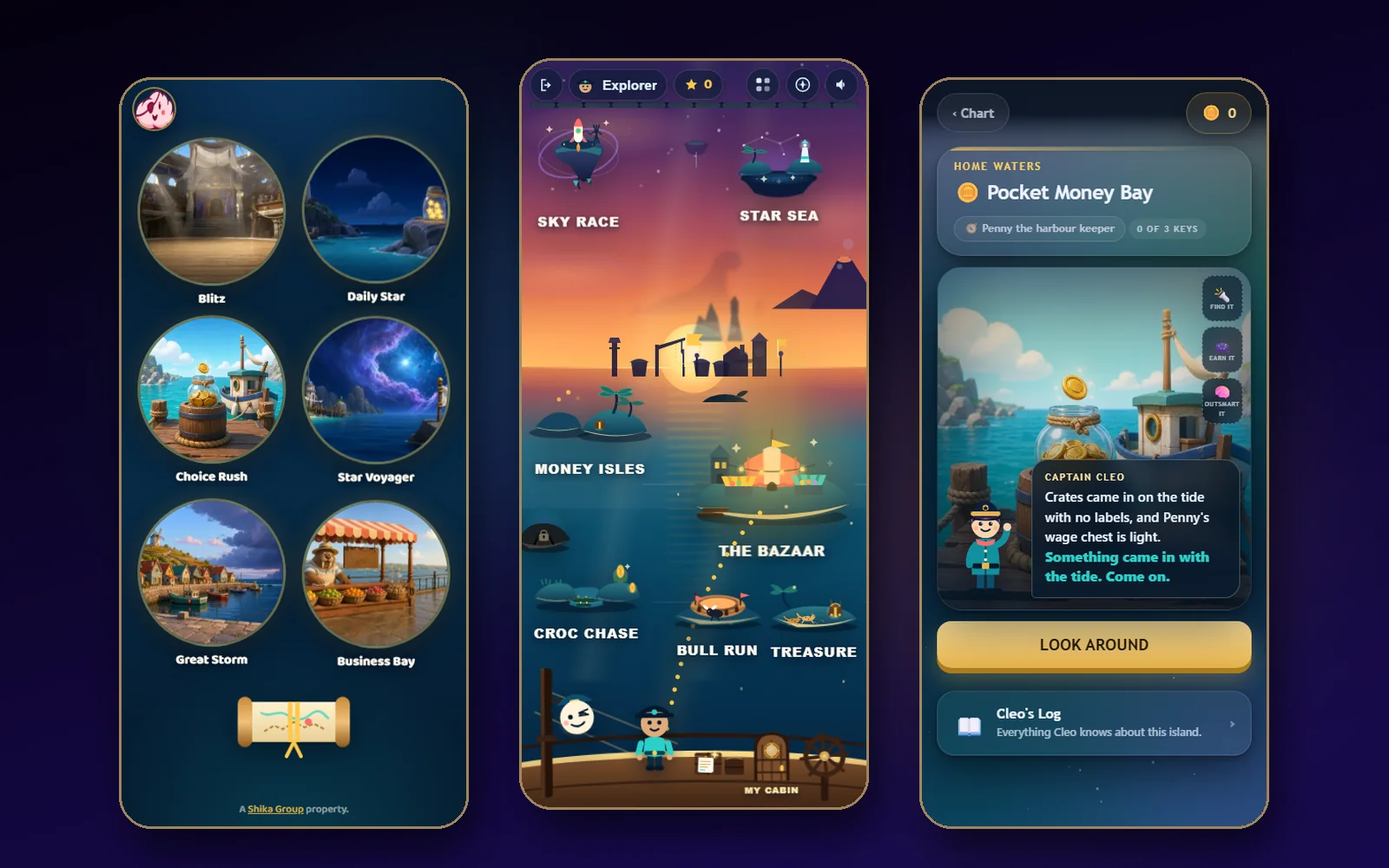
Captain Cleo on three phones: the first six games, the harbour a child returns to, and the first money island
Shika-built Learning games·Ages 5 to 15

Captain Cleo: a world of learning games for children

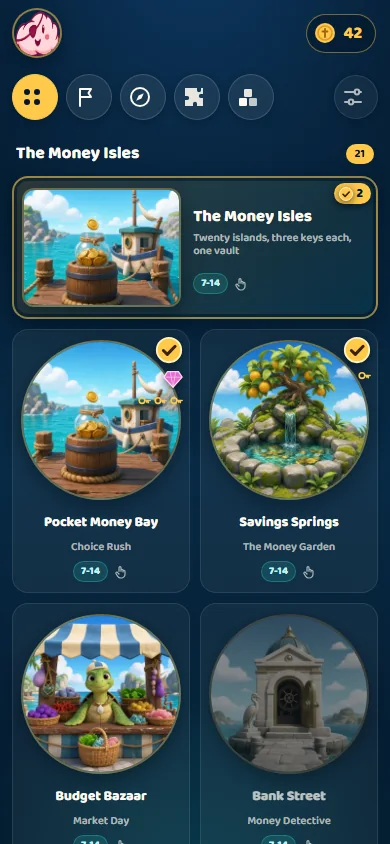
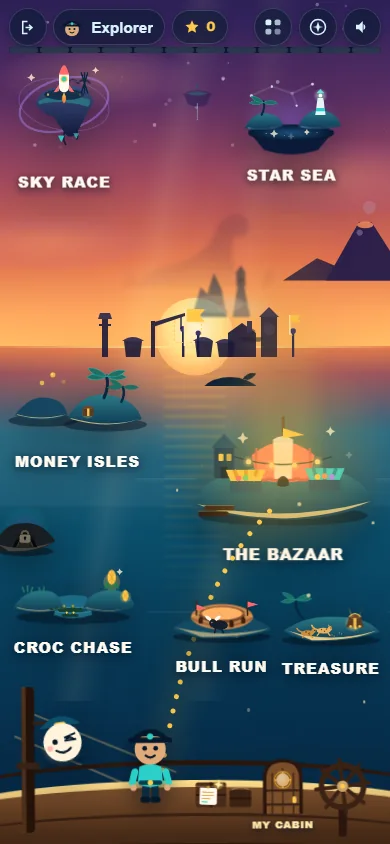
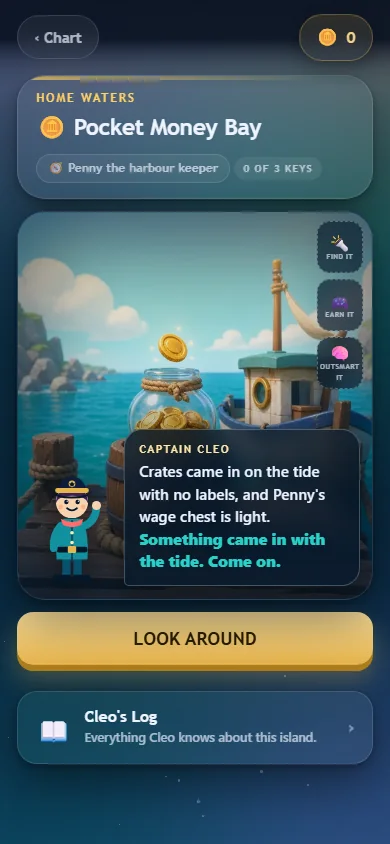
More than fifty games in one world: twenty money islands, a sea of maths, the thinking rooms and the open sea. Money, maths and clear thinking sit underneath the play. Every game is free, with no card, no login, no adverts and nothing to buy inside a game, and every character is scripted. A single registry names every game, and the chart a child taps is generated from it, so nothing can be left off the shelf by accident. The membership is for the grown-up: a Parent Port that shows how their child thinks, with the games behind every line.

  • Game design
  • Learning design
  • Illustration pipeline
  • Privacy by design
The Captain Cleo chart, with every learning game on one shelf for a child to tap
The chart. Every game on one shelf
The Captain Cleo harbour a child returns to, with the doors to each learning world
The Bay. Where a child comes back to
Pocket Money Bay, the first of the twenty Captain Cleo money islands
Pocket Money Bay. The first island
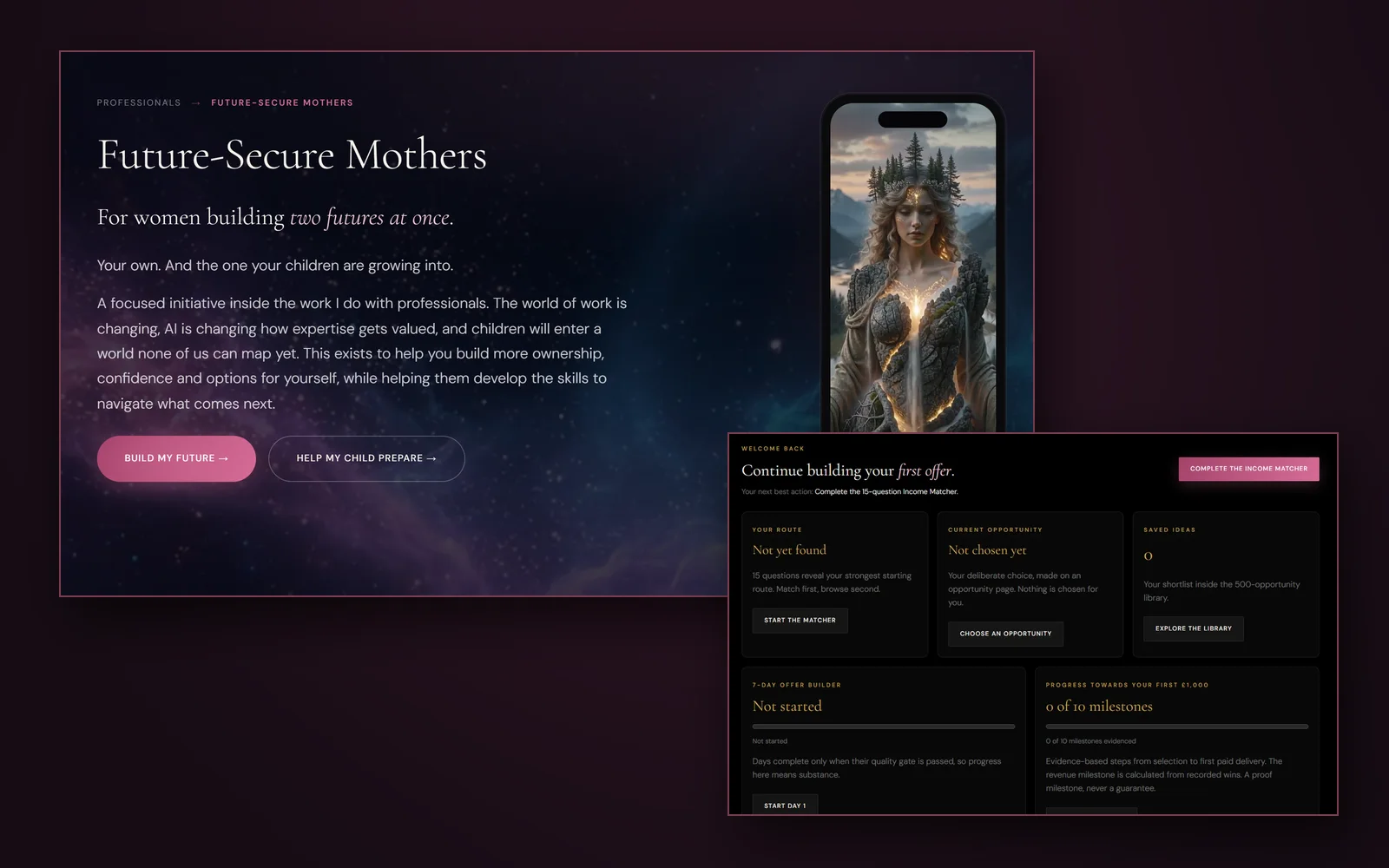
The home page and member dashboard of a paid membership platform built by Shika: a welcoming front page, then a personal next step, saved choices, a guided seven-day programme and a progress tracker
Shika-built Paid membership platform·United Kingdom

A paid membership platform, at the serious end

One payment unlocks the whole programme. Members sign in with a link sent to their email, answer fifteen questions and get their three best-fit options from a library of five hundred, then work through a guided seven-day programme with a tracker that records real progress. The owner can grant, pause or restore access from one screen.

  • Paid access
  • Member accounts
  • Guided programme
  • Progress tracking
  • Admin

How it works

You see it working before you pay in full.

01

We read first

Send us your syllabus, your course outline, your current site or a few honest paragraphs about who learns from you. We read all of it and come back with questions, in writing.

02

A clear, fixed proposal

What the learner will be able to do, what we will build, and when. One fixed scope you can say yes or no to, with no surprises later.

03

A working piece, early

You get one game, one explainer or one lesson working in your browser early on. Real learners can try it before the rest is built around it.

04

Launch, then learn

We launch, watch where learners stop, and fix it. The final payment comes after you have seen the whole thing working.

Need depth and motion? Our 3D websites work brings real depth to an explainer. Want your existing site to do more? See website to platform, or browse the full portfolio.

Common questions

Before you ask.

Can you build a learning game for a school or for children at home?
Yes. We design and build learning games that run in the browser on a phone, a tablet or a school computer, with nothing to install. We have built and run our own world of learning games for children aged 5 to 15, so we bring a working method, not a theory.
How do you keep a site for children safe?
We start from what the child does not need. In our own children's games there is no login, no chat, no online play with strangers, no adverts and nothing to buy inside a game, and progress stays on the device. We apply the same thinking to your project and collect only what the learning genuinely requires.
Is gamification just points and badges?
No. Points and badges bolted onto a lesson rarely change anything. We put the learning inside the thing the learner is doing, so getting better at the game means getting better at the subject. Rewards mark real progress, and nothing is designed to keep someone tapping after the learning has stopped.
Can you build a course or certification platform for adults?
Yes. For the professional end we build platforms with learner accounts, paid access, a guided programme, progress tracking and certificates. If you run a training business or an academy, our education and training page goes into that work in detail.
Will it work on phones and for learners with access needs?
Yes. We design for the phone first, because that is where most learners meet you. We use real text, clear contrast, keyboard access and controls that respect a device's reduced motion setting, so the learning reaches as many people as possible.
What does an educational website cost?
Every project is scoped individually, because one interactive explainer is not the same job as a world of games or a full course platform. Tell us what your learners should be able to do and we will come back with a clear fixed proposal before any work begins.

Start a learning project

Tell us what your learners should be able to do.

A syllabus, a rough idea for a game or a course outline is genuinely enough to begin. We will read it and show you what it could become.

Every project is scoped individually. Once we understand what you need, we will give you a clear fixed proposal before work begins.