Scientific website designHard science, told accurately.
To every reader at once.

For research groups, institutes, science-led startups, patient organisations and evidence platforms that have to explain difficult work to scientists, funders, patients and the public, often on the same page. Accuracy first. Claims your data supports. Complex data made navigable at any scale.

The usual problem

Four audiences. One website. Nobody well served.

A research website is rarely read by the people it was written for. Here is what we see most often.

01

Written for the lab, read by everyone else

The text is accurate and impenetrable. A funder, a journalist or a patient's family gives up in the second paragraph, and they were the reason the page exists.

02

Simplified until it is wrong

The opposite fix. Someone smooths the science into marketing, a specialist spots the overstatement, and the whole site loses their trust in one sentence.

03

The data is there, but nobody can use it

Results, registries and datasets sit in tables, PDFs and spreadsheets. The information exists. It is just unreadable to anyone who is not already an expert.

04

Invisible to search and to machines

Figures exported as images, papers as scans, key facts inside slides. No search engine, screen reader or answer engine can read a word of it.

What we build

A site that explains the science, and proves it.

Layered explanation

A plain-language layer a non-specialist can follow, with the full detail one step away for the specialist. Same page, same facts, two depths.

A path for each audience

Researchers, funders, partners, patients and press arrive with different questions. Each gets an obvious route to the answer they came for.

Scientific figures that teach

Diagrams sequenced so they can be read in order, and motion only where a mechanism is genuinely clearer moving than still.

Data made navigable

Registries, datasets and catalogues turned into structured pages people can search, filter and understand, generated from the source so the numbers stay current.

Publications, pipeline and news

Driven by structured data, so you can add a paper or move a programme forward without touching the layout, and without calling us.

Readable by machines

Real text, clean semantics, correct metadata and tested accessibility. Search engines, screen readers and answer engines can all read what you publish.

Accuracy first

We will not write a claim your data does not support.

In science, enthusiastic copywriting is a liability. Overstate a finding, blur early work into proven work, or round a cautious result into a confident one, and you have lost the specialists, misled the public and handed your critics a quote.

So every claim on the page traces back to something you have given us: a paper, a dataset, a protocol, a deck. Where two sources disagree, we come back and ask rather than picking the better-sounding version. Where something cannot be supported yet, we leave it out and tell you why.

For data platforms the same rule runs deeper. Fact and interpretation are kept apart. Sources sit beside the claim, not in a footnote nobody opens. If something is demonstration data, the page says so.

Your scientists have the final word on every line. We build the site so their corrections are quick to make.

Proof

Science explained, data made readable.

One client project and two platforms we built and run ourselves. Each solves a different part of the same problem.

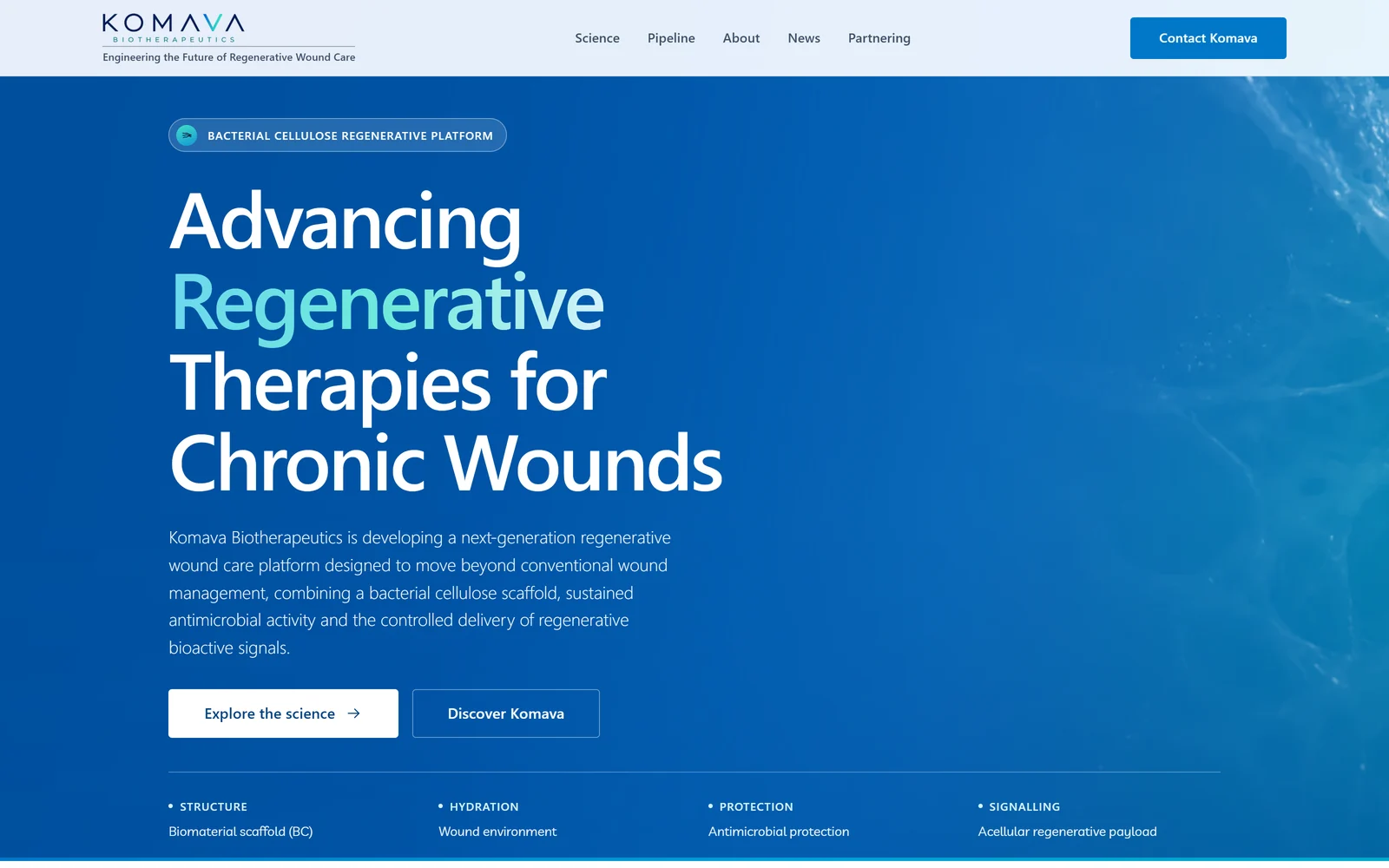
The Komava Biotherapeutics homepage, a deep blue scientific hero introducing a regenerative wound care platform
Client work Biotechnology·Switzerland

Komava Biotherapeutics: preclinical science for two readers at once

A preclinical company developing a regenerative wound care platform on a bacterial cellulose scaffold. Every page had to let an investor grasp the platform in under a minute, while a scientist reading the same paragraph found nothing loose or overstated. Content that had been trapped in flattened images became real, structured text. Three scientific figures are films, because a scaffold, an antimicrobial mechanism and a delivery concept are easier to understand in motion. The result is a twelve-page site on hosting the client controls.

  • Scientific storytelling
  • Structure
  • Design
  • Motion
  • Development
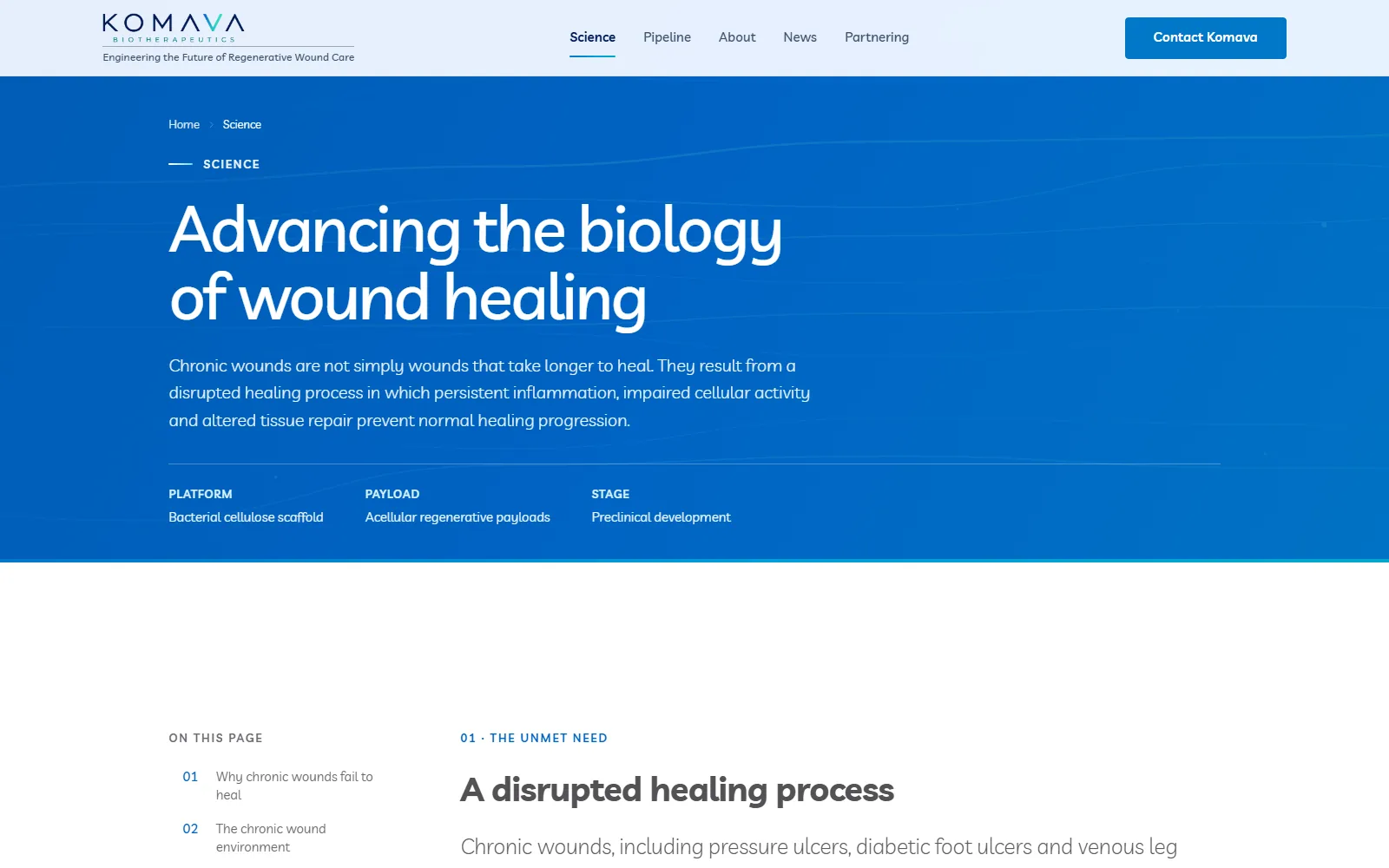
The Komava Biotherapeutics science page, explaining the biology of wound healing in a readable sequence
Komava science: complex biology, sequenced so it can be read in order
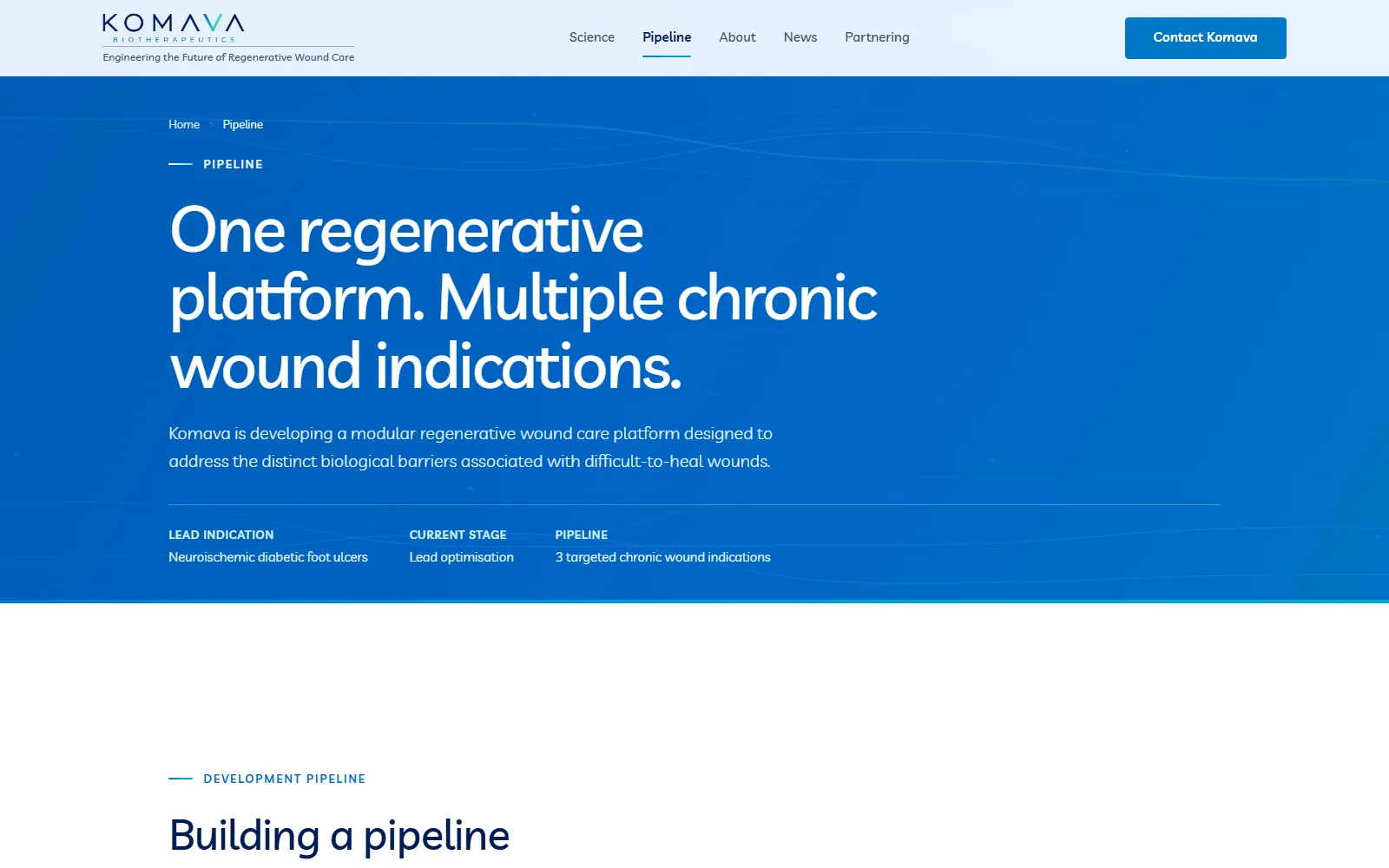
The Komava pipeline page showing each programme and its stage
Komava pipeline: structured data, so a programme can move without a rebuild
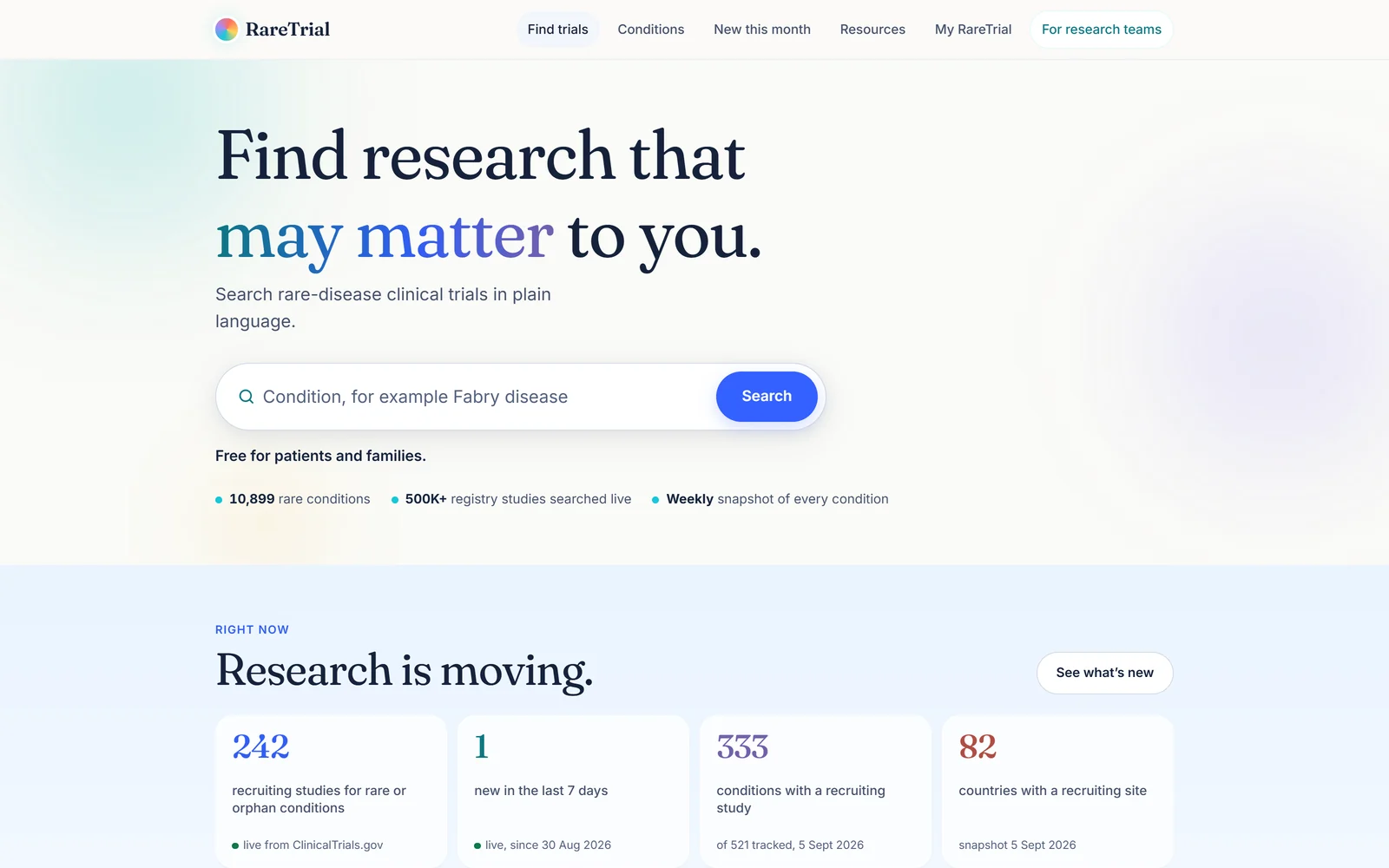
The RareTrial home page, a directory of rare disease clinical trials
Shika-built Health data·Public directory

RareTrial: a patient-facing science site at scale

Public clinical trial registries answer a question thousands of families ask: is anyone running a trial for this? The data is open and almost impossible for a non-specialist to use. RareTrial turns it into plain language across more than ten thousand condition pages, generated from the registry so the counts stay current. Every template had to read well for a condition with forty trials and one with none. Editorial, not clinical, because the reader is often having a bad day.

  • Information architecture
  • Editorial design
  • Data pipeline
  • Programmatic SEO
The AreaIQ intelligence platform, where a company enters its website address and sees developments that may create opportunity or risk for it
Shika-built Intelligence platform·Global

AreaIQ: evidence you can argue with

An intelligence platform that reads global investment, infrastructure, regulation and trade developments and works out which matter to one company. The design problem is the one every evidence platform shares: make a machine judgement legible. Every score expands to show what matched. Fact and interpretation are separate fields, rendered differently. Sourced or not shown. The ingestion sources are not connected yet, and the product labels its signals as demonstration data on the page.

  • Information architecture
  • Intelligence UX
  • Source transparency
  • Visual system

How it works

You see it working before you pay in full.

You do not need a polished brief. A paper, a deck, a dataset or a rough content document is enough to begin.

01

We read first

Send what you have. We read it properly and come back in writing: who the site is for, what each audience needs, what the data can support and what it cannot.

02

A clear fixed proposal

One scope, one price, one timeline, agreed before any work begins. No hourly meter running while your team checks the science.

03

You see it working

You review real pages with your real content, and your scientists correct them, before the final payment. Then it goes live on hosting you control.

A science-led company raising or partnering? Need logins, payments or a member area on top? Working under strict rules on what you can say? These pages are written for you.

Common questions

Before you ask.

How is this different from your biotech website service?
Our biotech page is for companies: partnering, investors and corporate credibility. This page is for anyone whose main job is explaining science to several audiences at once, such as research groups, institutes, patient organisations and evidence or data platforms. Many projects sit in both, and the way we handle claims is the same.
Who checks the science on the site?
You do. Every claim we write traces back to material you have given us. Where sources disagree we ask rather than choose, and where something cannot be supported yet we leave it out and tell you. Your scientists have the final word on every line, and we build the site so their corrections are quick to make.
Can you build a site from a large dataset or public registry?
Yes. RareTrial, a rare disease trials directory we built and run, generates more than ten thousand condition pages from public registry data. We design the page system, the data pipeline and the plain-language wording together, so every page holds up whether it has forty records or none.
Can patients and the public use the same site as researchers?
Yes, and that is usually the point. We give each audience an obvious path and a plain-language layer, while the full detail stays one step away for the specialist. Nobody is talked down to and nobody is lost.
Will our research be findable on Google and in AI answers?
We build everything as real, structured text with correct metadata, never images of text, so search engines, screen readers and AI assistants can read every word. Nobody honest can promise a ranking. We make sure nothing on your side is in the way.
What does a scientific website cost?
Every project is scoped individually, because a twelve-page institute site and a data platform with thousands of generated pages are different jobs. Tell us what you need and we will come back with a clear fixed proposal before any work begins.

Start a science project

Send us the paper.

Or the deck, the dataset, or the page you are embarrassed by. We will read it and tell you, in writing, what the site should do for each of your readers.

Every project is scoped individually. Once we understand what you need, we will give you a clear fixed proposal before work begins.